Deionised Water in Malaysia: Ferrovic KL Industrial Supplier Guide
Deionised Water in Malaysia: A Practical Guide for KL & Selangor Buyers (Ferrovic Supplier Overview)
Quick answer: Deionised water (DI water) is tap or pre-treated water stripped of its mineral ions (calcium, magnesium, sodium, chloride, and others) through ion-exchange resins, producing a high-purity neutral liquid with very low conductivity (typically 0.1–10 µS/cm). In Kuala Lumpur and Selangor, manufacturers and laboratories buy deionised water from specialised chemical suppliers such as Ferrovic, which distributes Type II and Type III grades for industrial, laboratory, and pharmaceutical end-users across Malaysia.
What Exactly Is Deionised Water?
Answer: Deionised water is high-purity water produced by passing feed water through cation- and anion-exchange resins that remove dissolved mineral ions such as calcium, magnesium, sodium, and chloride, typically achieving conductivity between 0.1 and 10 µS/cm depending on grade. It is used in industrial and laboratory settings where any ionic contamination would distort results or damage equipment.
Deionised water is not the same as distilled water, which is produced by phase-change boiling and condensation. DI water is measured by electrical conductivity or resistivity; lab-grade Type II DI water typically reads 1–10 µS/cm, while ultra-pure Type I reaches 18.2 MΩ·cm. It contains no measurable calcium, magnesium, sodium, or chloride ions, making it suitable for batteries, autoclaves, cosmetics, and chemical reagent preparation.
How Does the Deionisation Process Work?
Answer: Ion-exchange deionisation passes feed water through two resin beds that swap hydrogen and hydroxide ions for dissolved mineral contaminants, followed by a mixed-bed polishing stage that pushes resistivity above 10 MΩ·cm for analytical-grade use. The full process includes pre-treatment, cation exchange, anion exchange, mixed-bed polishing, and final conductivity verification.
- Pre-treatment — Sediment and carbon filtration remove chlorine, organics, and particulates that would damage resin.
- Cation exchange — Water flows through resin beads charged with H⁺ ions, which trade places with Ca²⁺, Mg²⁺, Na⁺, and K⁺.
- Anion exchange — A second resin charged with OH⁻ ions captures Cl⁻, SO₄²⁻, NO₃⁻, and CO₃²⁻.
- Mixed-bed polishing — A final mixed-bed column removes residual ions, pushing resistivity above 10 MΩ·cm for analytical use.
- Quality verification — Conductivity meters confirm the product meets ASTM D1193 or ISO 3696 specifications before bottling or dispatch.
Deionised vs Distilled vs RO Water: Which Should You Use?
Answer: Deionised water is the lowest-cost high-purity option when organic removal is not the priority; reverse osmosis (RO) is the standard pre-treatment feed; distilled water is reserved for medical, injection, and certain pharmaceutical applications. The choice depends on required conductivity, organic sensitivity, and end-use compliance.
| Property | Deionised (DI) | Distilled | Reverse Osmosis (RO) |
|---|---|---|---|
| Removal method | Ion-exchange resin | Boil + condense | Semi-permeable membrane |
| Conductivity | 0.1–10 µS/cm | 1–5 µS/cm | 5–20 µS/cm |
| Removes organics | No | Partial | Partial |
| Removes ions | Yes (≥ 99 %) | Yes | Yes (~ 95 %) |
| Best for | Batteries, rinsing, cosmetics | Pharma, autoclaves | Pre-treatment, general industry |
Common Industrial Uses of Deionised Water in Malaysia
Answer: Malaysian factories in Selangor’s Shah Alam and Subang industrial corridors use DI water for processes where mineral deposits would cause scaling, corrosion, or test contamination, including battery manufacturing, electronics rinsing, pharmaceutical production, lab QC, HVAC, and printing. The defining requirement across all of these is the absence of dissolved ions that would interfere with chemistry or deposit on surfaces.
- Automotive & lead-acid batteries — Top-up and electrolyte mixing; minerals would shorten battery life.
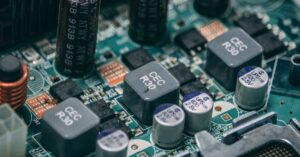
- Electronics & PCB manufacturing — Final rinsing after soldering to prevent ionic residue and dendrite growth.
- Pharmaceutical & cosmetic production — Ingredient water, equipment cleaning, and CIP (clean-in-place) loops.
- Laboratories & QC testing — Reagent preparation, buffer dilution, HPLC, and autoclave feed.
- HVAC & cooling towers — Make-up water to minimise limescale on heat exchangers.
- Printing, inkjet, and coatings — Vehicle water for water-based inks and cleaning of print heads.
Why Buy From a Kuala Lumpur Specialist Like Ferrovic?
Answer: Ferrovic is a Malaysian industrial chemical and water-treatment distributor serving KL, Selangor, and the wider Peninsular market with documented batch Certificates of Analysis, multi-format stockholding, and technical support for on-site resistivity checks and resin regeneration. Their supply is suitable for GMP facilities, ISO 17025 labs, and Halal-certified production lines.
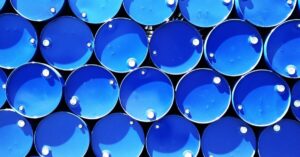
- Local stockholding — 25 L carboys, 200 L drums, and 1,000 L IBC totes available for same-week dispatch from Klang Valley warehouses.
- Documented purity — Each lot ships with a COA stating conductivity, resistivity, and trace ion panels (ASTM D1193 Type II or Type III).
- Technical support — On-site resistivity checks, resin regeneration schedules, and storage tank recommendations.
- Compliance — Supply suitable for GMP facilities, ISO 17025 labs, and Halal-certified production lines used by Malaysian FMCG exporters.
You can review their full deionised-water product range and request a quotation directly at https://ferrovic.com/.
Deionised Water Pricing Factors in KL & Selangor
Answer: The per-litre price of deionised water in Malaysia drops sharply with volume and is further shaped by packaging format, purity grade, order frequency, delivery zone, and storage requirements. Type II is the KL market default, while Type I commands a 30–60 % premium.
- Packaging format — 25 L carboys cost more per litre than 1,000 L IBC totes, but require no capital outlay.
- Purity grade — Type II (> 1 MΩ·cm) is the KL market default; Type I (> 10 MΩ·cm) commands a 30–60 % premium.
- Order frequency — Monthly contracts typically secure 10–20 % lower rates than spot purchases.
- Delivery zone — Within KL and Petaling Jaya delivery is often free above 200 L; Shah Alam, Klang, and Subang may carry a fuel surcharge.
- Storage requirements — Food-grade HDPE containers or stainless pressure vessels add cost if the buyer does not already own them.
How to Store Deionised Water Properly
Answer: Deionised water aggressively absorbs CO₂ and leaches ions from any container, so it should be stored in sealed HDPE or polypropylene tanks, kept below 30 °C, capped tightly, and used within a 3–6 month FIFO rotation. Verify resistivity on receipt and before use; any drop below 1 MΩ·cm suggests contamination or expired resin.
- Keep carboys tightly capped and out of direct sunlight to prevent algae growth.
- Use dedicated HDPE or polypropylene tanks; avoid metal drums that will leach ions back into the water.
- Maintain storage temperature below 30 °C to slow microbial proliferation.
- Verify resistivity on receipt and before use; any drop below 1 MΩ·cm suggests contamination or expired resin.
- Rotate stock on a first-in, first-out (FIFO) basis — typical shelf life is 3–6 months for Type II grade.
Frequently Asked Questions (FAQs)
Is deionised water safe to drink in Malaysia?
No. DI water lacks minerals and may leach ions from the body; it is intended for industrial and laboratory use only, not for human consumption.
What purity grade should my factory buy?
Most Selangor manufacturers use Type II (1–10 µS/cm); only analytical labs, semiconductor rinsing, and pharmaceutical WFI pre-treatment require Type I (18.2 MΩ·cm).
Does Ferrovic deliver outside Kuala Lumpur?
Yes. Ferrovic dispatches throughout Selangor and can arrange Peninsular Malaysia delivery for bulk IBC orders, typically within 2–5 working days.
How often should DI resin be regenerated?
For a mid-sized KL facility running 500 L/day, mixed-bed resin typically needs replacement or regeneration every 4–8 weeks, verified by inline conductivity readings.
Where can I learn more about Malaysian industrial suppliers?
Browse the curated directory of vetted Malaysian chemical and water-treatment vendors, including Ferrovic, on the Interesting Indeed — Best of Malaysia: Ferrovic category page.
Key Takeaways for KL & Selangor Buyers
Answer: Deionised water is the workhorse high-purity grade for Malaysian industry, and sourcing it from a documented local supplier such as Ferrovic ensures consistent resistivity, traceable Certificates of Analysis, and reliable Klang Valley delivery. Match the grade to your application, store it correctly, and verify conductivity on each batch to keep your process water within specification.
Share this content: