Data Center Guide for Klang Valley, Malaysia: Benefits, Providers & Trends
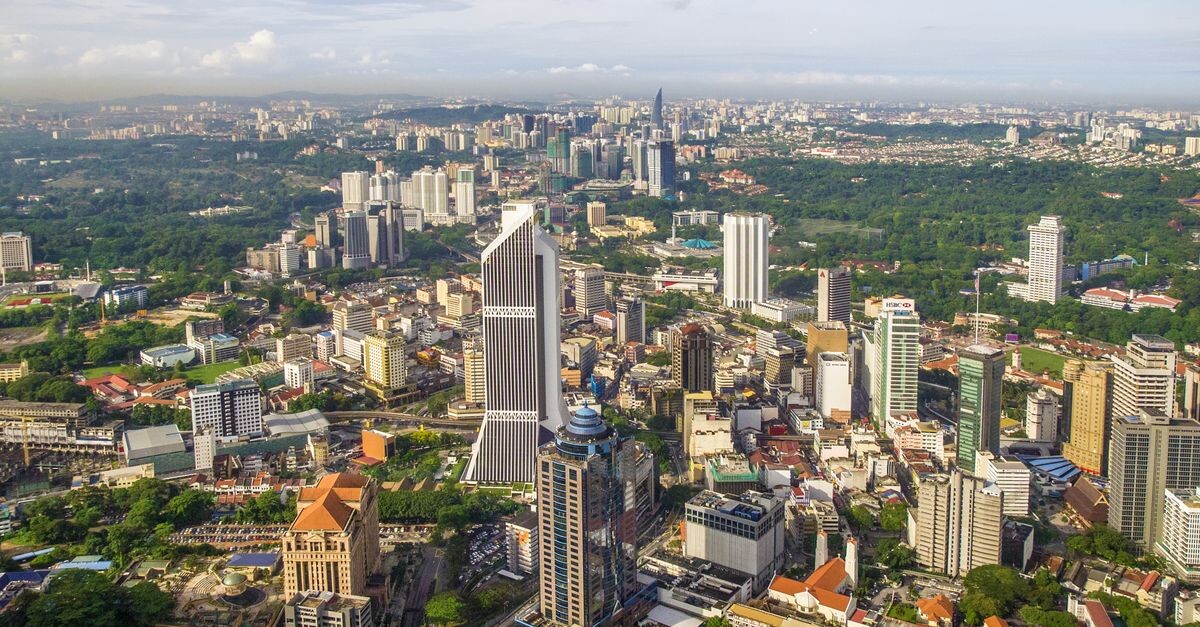
Klang Valley has emerged as Malaysia’s leading data center hub, driven by its strategic location, robust infrastructure, and supportive government policies. This guide explores why businesses choose Klang Valley for colocation, hyperscale, or build‑to‑suit facilities, covering technical specifications, provider options, sustainability practices, and a step‑by‑step selection process.
For additional insights on Malaysia’s top infrastructure projects, see this curated list: https://interesting-indeed.com/blog/v1/category/best-of-malaysia/qpstransformers-com/
What makes Klang Valley ideal for data center development?
Klang Valley’s strategic location near Kuala Lumpur, robust power grid, extensive fiber‑optic network, skilled workforce, government tax incentives, direct submarine cable landings, and low seismic risk make it Malaysia’s premier data center hub, enhancing reliability, lowering costs, and attracting hyperscale operators for businesses.
The region benefits from proximity to the capital, reliable electricity, high‑speed fiber links, and a talent pool trained in ICT and engineering. Government incentives such as Pioneer Status and Investment Tax Allowance further reduce capex, while low seismic activity and access to submarine cables ensure continuous operation.
How does the region’s power infrastructure support high‑density computing?
Klang Valley’s power infrastructure delivers 99.999% availability through multiple 275 kV transmission lines, redundant substations, dedicated UPS systems, and diesel generators with 72‑hour fuel reserves, supplemented by emerging solar‑plus‑storage pilots and smart‑grid monitoring that balances loads in real time, enabling stable operation for racks exceeding 20 kW.
- Multiple 275 kV transmission lines providing grid redundancy.
- Redundant substations ensuring uninterrupted supply.
- Dedicated UPS systems with ≥2000 A capacity for seamless power.
- Diesel generators storing 72‑hour fuel reserves for extended outages.
- Solar‑plus‑storage pilots reducing reliance on fossil fuels.
- Smart‑grid monitoring enabling real‑time load balancing and energy optimization.
What role does fiber‑optic connectivity play in Klang Valley’s data center appeal?
Klang Valley hosts over 12,000 km of terrestrial fiber and landing points for major submarine cables SEA‑ME‑WE 5 and APCN 2, providing sub‑5 ms latency to Singapore and under 20 ms to key Asian financial hubs, which is essential for latency‑sensitive workloads such as finance, gaming, and cloud services.
- Terrestrial fiber length: >12,000 km.
- Submarine cable landings: SEA‑ME‑WE 5, APCN 2.
- Latency to Singapore: <5 ms.
- Latency to major Asian hubs: <20 ms.
- Supports high‑frequency trading, real‑time gaming, and distributed cloud workloads.
Which key data center providers operate in Klang Valley?
Leading providers in Klang Valley include global hyperscale firms Google, Microsoft Azure, and Amazon Web Services, alongside regional players TIME dotCom, NTT Ltd, and Sify Technologies, collectively offering over 1.2 GW of critical IT load across colocation, managed services, and build‑to‑suit facilities.
- Google Cloud – hyperscale zones.
- Microsoft Azure – enterprise cloud regions.
- Amazon Web Services – AWS Malaysia region.
- TIME dotCom – domestic colocation and connectivity.
- NTT Ltd – global carrier‑neutral facilities.
- Sify Technologies – managed services and build‑to‑suit.
What are the typical power density and cooling options offered by these providers?
Typical power densities range from 5 kW per rack for enterprise colocation to over 30 kW per rack for hyperscale suites, with cooling options such as raised‑floor CRAC units, in‑row chillers, and liquid‑cooling loops that enable PUE values as low as 1.25 in newer facilities.
- Enterprise colocation: 5‑10 kW/rack, raised‑floor CRAC.
- Mid‑tier: 10‑20 kW/rack, in‑row chillers.
- Hyperscale: >30 kW/rack, liquid‑cooling loops.
- Resulting PUE: 1.20‑1.30 for air‑cooled, ≤1.25 for liquid‑cooled designs.
How do service level agreements (SLAs) differ among providers in Klang Valley?
SLAs in Klang Valley commonly guarantee network uptime of 99.99% to 99.999%, power availability of 99.99%, and mean time to repair under four hours for critical infrastructure, with premium tiers offering financial credits for breaches and dedicated on‑site engineering support plus 24/7 NOC monitoring.
- Network uptime: 99.99% (standard) → 99.999% (premium).
- Power availability: 99.99% across tiers.
- MTTR: ≤4 hours for critical systems.
- Financial credits: service‑level rebates for any SLA breach.
- On‑site engineering: dedicated staff for premium contracts.
- NOC monitoring: 24/7 real‑time oversight.
What are the essential technical specifications to look for in a Klang Valley data center?
When evaluating a Klang Valley data center, check for Tier III or Tier IV redundancy, minimum 2N power distribution, ≥2000 A UPS capacity, FM‑200 or inert‑gas fire suppression, raised floor height ≥600 mm, and certifications including ISO 27001, PCI‑DSS, and compliance with Malaysia’s PDPA to ensure security and operational resilience.
- Redundancy: Tier III (minimum) or Tier IV (fault tolerant).
- Power: 2N or 2N+1 distribution architecture.
- UPS: ≥2000 A capacity supporting full load.
- Fire suppression: FM‑200 or inert‑gas, NFPA 2001 compliant.
- Raised floor: ≥600 mm for plenum and cabling.
- Certifications: ISO 27001, PCI‑DSS, PDPA, plus optional GBI or ISO 50001.
How does fire suppression impact safety and compliance?
FM‑200 and inert‑gas systems extinguish fires without damaging electronics, leave no residue, and meet NFPA 2001 and local Bomba standards, ensuring personnel safety, minimal downtime, and compliance with ISO 27001 Annex A.12.1.2 on physical security while satisfying DOSH requirements for hazardous material storage.
These agents are non‑conductive, require no cleanup after discharge, and are approved for use in occupied spaces, making them ideal for protecting critical IT equipment while maintaining regulatory adherence.
Why is raised floor height important for cooling and cabling?
A raised floor height of at least 600 mm creates sufficient plenum space for conditioned air distribution, accommodates extensive cabling trays, and facilitates under‑floor leak detection, which improves cooling efficiency, reduces hot‑spot formation, and simplifies maintenance in high‑density racks for operators.
- Plenum height enables uniform cold‑air delivery.
- Cable trays avoid congestion and improve airflow.
- Leak detection sensors protect against water damage.
- Reduces hot spots by preventing air recirculation.
- Simplifies floor panel removal for maintenance.
How do sustainability and energy efficiency standards shape data centers in Klang Valley?
Data centers in Klang Valley increasingly adopt renewable energy PPAs, target PUE below 1.3 via free‑cooling and liquid‑cooling, and pursue certifications such as GBI Silver/Gold and ISO 50001, aligning with Malaysia’s National Green Technology Policy and corporate ESG goals to lower carbon footprints and operating costs.
- Renewable PPAs: solar or wind contracts reducing grid reliance.
- Free‑cooling: uses ambient air/chillers to cut compressor load.
- Liquid‑cooling: direct‑to‑chip or immersion for high density.
- GBI certification: evaluates site, energy, water, materials, IEQ.
- ISO 50001: energy management system for continual improvement.
What role does free‑cooling play in reducing PUE?
Free‑cooling uses ambient air or water to remove heat without mechanical chillers, cutting compressor energy use by 30‑50% and lowering PUE to as low as 1.15 in temperate months, which reduces electricity costs, carbon footprint, and extends equipment lifespan for data centers.
- Compressor energy reduction: 30‑50% lower.
- PUE achievement: 1.15‑1.20 in cool seasons.
- Electricity cost savings: proportional to compressor reduction.
- Carbon footprint: lower due to less fossil‑fuel generation.
- Equipment lifespan: cooler operating temperatures extend hardware life.
How are Green Building Index (GBI) certifications obtained for data centers?
To earn GBI certification, a data center must submit design and operational data covering energy efficiency, indoor environmental quality, sustainable site planning, materials and resources, and water efficiency; a third‑party assessor verifies compliance, awarding points that determine the Certified, Silver, Gold, or Platinum rating.
- Prepare documentation on energy use, IEQ, site, materials, water.
- Submit to GBI accreditation body for review.
- Third‑party assessor conducts site audit and verification.
- Points are awarded per category; total determines rating level.
- Certification is issued; recertification required every three years.
What steps should businesses take to select or build a data center in Klang Valley?
Businesses should first define workload requirements and budget, then conduct a site‑selection audit evaluating power, connectivity, compliance, and sustainability scores, engage a qualified integrator for design‑build or colocation contracts, and finally implement a migration plan with rigorous testing and SLA validation before go‑live.
- Define workload: compute, storage, power density, latency needs.
- Set budget: capex, opex, contingency.
- Site‑selection audit: assess utility feed, fiber routes, regulatory compliance, sustainability metrics.
- Engage integrator: select design‑build contractor or colocation provider.
- Negotiate contracts: SLAs, uptime guarantees, renewal terms.
- Migration plan: phased move, testing, rollback procedures.
- Go‑live validation: performance testing, SLA confirmation, documentation.
How to conduct a power and connectivity audit?
A power audit reviews utility feed capacity, transformer ratings, UPS sizing, generator fuel reserves, and load diversity, while a connectivity audit maps fiber routes, measures latency to key exchanges, checks carrier diversity, and validates SLA‑backed uptime guarantees from ISPs and colocation providers.
- Power audit steps:
- Measure utility feed voltage and current capacity.
- Verify transformer ratings and redundancy.
- Confirm UPS sizing matches peak load.
- Check generator fuel storage and test run time.
- Analyze load diversity across phases.
- Connectivity audit steps:
- Map all incoming fiber routes and entry points.
- Use latency testing tools to ping key IXPs.
- Validate presence of multiple ISPs for carrier diversity.
- Review ISP and colocation SLAs for uptime guarantees.
What migration best practices minimize downtime?
Best practices include phased workload migration using live‑vmotion or storage replication, maintaining a synchronized fallback environment, conducting cut‑over during low‑traffic windows, validating application performance post‑move, and executing rollback procedures within the agreed MTTR if issues arise, while documenting each step for audit compliance.
- Phased migration: move non‑critical workloads first, then critical.
- Live‑vmotion: transfer VMs without downtime.
- Storage replication: sync data to target before cut‑over.
- Fallback environment: keep a hot‑standby replica.
- Cut‑over window: schedule during nights or weekends.
- Performance validation: run benchmarks and user‑acceptance tests.
- Rollback procedures: revert to source within MTTR if failures.
- Documentation: log each step for audit and compliance.
Frequently Asked Questions (FAQs)
What is the average PUE for a modern data center in Klang Valley?
Modern facilities in Klang Valley typically achieve PUE values between 1.15 and 1.30, depending on the cooling technology employed and seasonal climate conditions. This range reflects efficient designs that leverage free‑cooling and advanced HVAC systems.
Which submarine cables land in Klang Valley?
The primary submarine cables landing in Klang Valley are SEA‑ME‑WE 5 and APCN 2, which provide direct links to Singapore, India, and the broader Asia‑Pacific region. These cables enable sub‑5 ms latency to Singapore and under 20 ms to major financial hubs.
Are there any tax incentives for data center investors in Malaysia?
Yes, the Malaysian government offers Pioneer Status and Investment Tax Allowance schemes that can reduce corporate tax by up to 70% for qualifying data center projects. These incentives are designed to attract high‑value infrastructure investments and boost the digital economy.
How much power capacity is currently available in Klang Valley data centers?
The combined critical IT load of existing Klang Valley data centers exceeds 1.2 GW, with additional greenfield projects under development expected to add another 500 MW by 2027. This capacity supports both colocation and hyperscale workloads across the region.
What compliance standards must a data center meet to operate in Malaysia?
Operators must comply with ISO 27001 for information security, PCI‑DSS for payment card data, and Malaysia’s Personal Data Protection Act (PDPA) 2010 for consumer privacy, alongside local fire and safety regulations. Adherence to these standards ensures legal operation and protects both data and personnel.
Share this content: