AI Digital Transformation, Web & Automation Solutions for SMEs in Malaysia

Introduction: The New Era of AI-Powered Business Transformation
Businesses today are operating in a digital-first economy where visibility, automation, and speed determine competitiveness. Traditional websites and basic marketing systems are no longer sufficient to sustain growth.
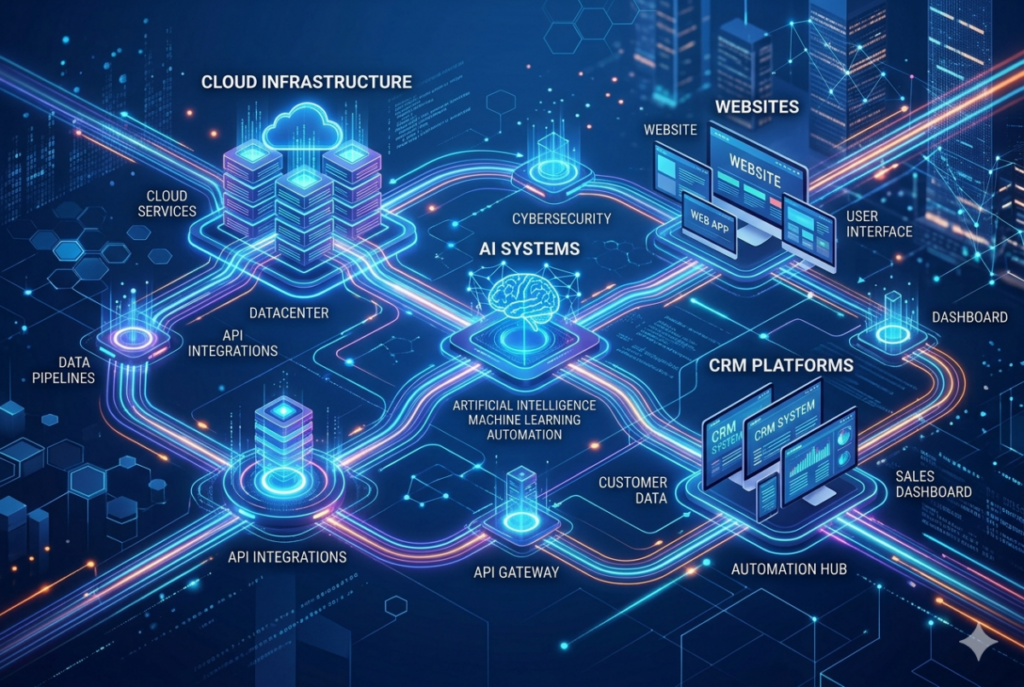
Modern companies require integrated digital ecosystems that combine:
- High-performance websites
- Intelligent automation systems
- AI-powered business workflows
- Cloud infrastructure
- Digital marketing systems
- Scalable software solutions
The shift is no longer about building a website—it is about building a self-operating digital business engine.
Organizations that adopt this transformation experience:
- Faster customer acquisition
- Reduced operational workload
- Higher conversion rates
- Improved customer experience
- Scalable long-term growth
This is where next-generation digital solution providers play a critical role—helping businesses move from manual processes to fully automated ecosystems.
1. Understanding Modern Digital Transformation Systems
A complete digital transformation system is not a single product. It is a connected ecosystem of technologies working together.
1.1 Core Components of a Modern Business System
A fully optimized system includes:
1. Website & Digital Presence Layer
- Business website
- Landing pages
- SEO-optimized structure
- Mobile-first experience
2. Lead Generation Layer
- Contact forms
- Chat systems
- AI chat assistants
- Social media integrations
3. Automation Layer
- Auto-replies
- Email workflows
- CRM integration
- Lead scoring systems
4. AI Intelligence Layer
- Customer behaviour analysis
- Automated decision-making
- Predictive engagement
- Conversational AI agents
5. Infrastructure Layer
- Cloud hosting
- Secure databases
- Scalable backend systems
- Performance optimization
2. Why Businesses Fail Without Digital Integration
Many SMEs and enterprises still operate using fragmented systems such as:
- Separate website and CRM
- Manual lead tracking
- Disconnected marketing tools
- Human-dependent follow-ups
Common Problems
1. Lost Leads
Enquiries are not followed up fast enough, resulting in lost revenue.
2. Inefficient Sales Processes
Sales teams spend too much time on repetitive tasks instead of closing deals.
3. Lack of Visibility
Business owners cannot see real-time performance data.
4. High Operational Costs
More manpower is needed to manage growing business volume.
3. The Shift Toward AI-Driven Business Ecosystems
AI is now transforming how businesses operate by introducing:
3.1 Automated Customer Interaction
AI systems respond instantly to customer inquiries, reducing waiting time and improving engagement.
3.2 Intelligent Lead Qualification
Not all leads are equal. AI can analyze:
- Budget
- Intent
- Urgency
- Product interest
This ensures sales teams focus only on high-value opportunities.
3.3 Predictive Customer Behavior
AI can predict:
- When a customer is likely to buy
- What product they prefer
- When they might drop off
3.4 Workflow Automation
Tasks such as:
- Email follow-ups
- Appointment scheduling
- Data entry
- Report generation
are now automated.
4. Website Development as a Business Growth Engine
A modern website is no longer a digital brochure. It is a conversion engine.
Key Functions of a High-Performance Website
- Capture leads automatically
- Convert visitors into customers
- Integrate with CRM systems
- Support AI chat assistants
- Track user behavior
Essential Website Features
- Fast loading speed
- Mobile responsiveness
- SEO-ready architecture
- Secure hosting
- Conversion-focused design
A website that is not optimized for conversions is a missed business opportunity.
5. AI Automation in Business Operations
Automation is the backbone of modern business scalability.
5.1 Sales Automation
- Auto-replies to enquiries
- Lead routing to sales team
- Follow-up scheduling
- Customer segmentation
5.2 Marketing Automation
- Email campaigns
- Social media scheduling
- Audience targeting
- Performance tracking
5.3 Customer Service Automation
- Chatbots
- FAQ automation
- Ticket management systems
- Instant support responses
5.4 Internal Operations Automation
- Reporting dashboards
- Workflow approvals
- Document processing
- Notification systems
6. Cloud Infrastructure for Scalability
Cloud technology ensures businesses can scale without limitations.
Benefits of Cloud Systems
- High availability
- Scalable resources
- Secure data storage
- Global accessibility
- Reduced infrastructure cost
Key Cloud Functions
- Hosting websites and applications
- Managing databases
- Running AI systems
- Supporting automation workflows
Cloud infrastructure is the foundation that supports all digital operations.
7. Software Development for Custom Business Needs
Every business has unique requirements that off-the-shelf tools cannot solve.
Custom Software Solutions Include:
- CRM systems tailored to workflows
- Inventory management systems
- Booking platforms
- Internal dashboards
- Enterprise automation tools
Why Custom Software Matters
- Built for specific business processes
- Scalable architecture
- Better integration with AI systems
- Long-term cost efficiency
8. Digital Marketing in a Data-Driven World
Marketing today is no longer guesswork—it is data-driven execution.
Core Digital Marketing Channels
- Search visibility optimization
- Paid advertising
- Social media engagement
- Content marketing
- Email marketing
Modern Marketing Strategy Includes
- Audience targeting
- Conversion tracking
- Funnel optimization
- Retargeting campaigns
Marketing success depends on data, automation, and consistency.
9. AI Integration Across All Business Layers
AI is no longer a separate tool—it is embedded across systems.
AI Applications in Business
- Smart chat assistants
- Automated decision systems
- Predictive analytics
- Content generation
- Workflow optimization
AI Advantages
- Reduces manual workload
- Improves accuracy
- Enhances customer experience
- Speeds up operations
10. Real Business Transformation Model
A fully integrated system transforms businesses in stages:
Stage 1: Digital Foundation
- Website and hosting setup
- Basic CRM integration
Stage 2: Automation Deployment
- Lead management systems
- Email automation
- Chat systems
Stage 3: AI Enhancement
- Intelligent assistants
- Predictive analytics
- Smart workflows
Stage 4: Full Ecosystem Integration
- Cloud + CRM + AI + Marketing
- Fully connected operations
11. Industry Applications
Retail & E-Commerce
- Automated order tracking
- AI product recommendations
- Customer retention systems
Manufacturing
- Inventory automation
- Supply chain tracking
- Predictive maintenance
Professional Services
- Appointment automation
- Client onboarding systems
- Document processing
Education & Training
- Student management systems
- Automated enrollment workflows
- Digital learning platforms
12. Business Benefits of Digital Transformation
Companies adopting integrated systems experience:
- Faster sales cycles
- Higher lead conversion rates
- Reduced operational costs
- Improved customer satisfaction
- Scalable growth capabilities
The ultimate goal is to build a self-sustaining business system.
Conclusion: Building the Future-Ready Business
The future of business belongs to organizations that embrace integration, automation, and intelligence.
Instead of relying on fragmented tools and manual processes, modern companies must evolve into fully connected digital ecosystems.
By combining websites, automation, AI systems, cloud infrastructure, and custom software, businesses can achieve:
- Sustainable growth
- Operational efficiency
- Competitive advantage
- Long-term scalability
Digital transformation is no longer optional—it is essential for survival and growth in today’s economy.
FAQ
1. What is digital transformation for businesses?
Digital transformation is the integration of digital technologies such as websites, AI, automation, and cloud systems into business operations to improve efficiency and growth.
2. Why do businesses need AI automation?
AI automation reduces manual work, speeds up response times, improves accuracy, and allows businesses to scale without increasing manpower.
3. Is a website still important for modern businesses?
Yes. A website is the central hub of digital operations and acts as a lead generation and conversion engine when properly optimized.
4. How does cloud infrastructure help businesses?
Cloud systems provide scalable, secure, and cost-effective infrastructure to host applications, manage data, and support AI systems.
5. Can small businesses benefit from automation?
Yes. Small businesses benefit significantly by reducing workload, improving efficiency, and increasing customer engagement without hiring additional staff.
6. What is the role of AI in business growth?
AI helps businesses analyze data, automate tasks, predict customer behavior, and improve decision-making processes.
7. What industries benefit most from digital transformation?
Retail, manufacturing, professional services, education, and e-commerce industries benefit the most due to their reliance on customer interaction and operations efficiency.
Share this content: