Aluminium Bending Guide for Fabricators in Selangor, Malaysia
What is aluminium bending and why is it important for fabricators?
Aluminium bending is the controlled deformation of aluminium sheet or profile along a straight axis to achieve a specific angle or shape without cracking. It is vital for fabricators because it creates lightweight, strong components for automotive, construction, and electronics, reducing welding and assembly time while preserving structural integrity.
For more on sheet metal bending fundamentals, see the Wikipedia page on sheet metal bending.
How does aluminium bending differ from other metal bending processes?
Aluminium bending differs from steel or copper bending mainly due to its lower yield strength and higher springback, which demand precise force control and tailored tooling. Fabricators must also manage aluminium’s rapid work‑hardening by selecting suitable bend radii and lubrication to avoid tearing or cracking.
- Lower yield strength means less force needed but more springback.
- Higher work‑hardening rate requires frequent annealing or lubrication.
- Softer alloys allow tighter bend radii; harder alloys need larger radii.
How does the aluminium bending process work step by step?
The aluminium bending process starts with selecting and preparing the material, then setting up a press brake or roll former with appropriate dies. The sheet is clamped, the bend is executed at a controlled speed, and the part is released, inspected for angle accuracy, and any springback is compensated before proceeding to the next operation.
Operators typically follow these steps:
- Select the appropriate aluminium alloy and thickness.
- Clean the sheet and mark the bend line.
- Set up the press brake with correct punch, die, and tonnage.
- Clamp the sheet securely.
- Execute the bend at a controlled ram speed.
- Release the clamp and measure the achieved angle.
- Adjust for springback if needed.
- Inspect for defects and move to the next operation.
What are the key parameters to set on a press brake for aluminium?
Key press brake parameters for aluminium are tonnage, punch and die angle, bend radius, and stroke length. Operators must calculate the required force based on alloy thickness and tensile strength, select a die width at least eight times the material thickness, and set punch penetration to achieve the desired bend angle while compensating for springback.
- Tonnage: calculated from material thickness, tensile strength, and bend length.
- Die width: ≥ 8 × material thickness.
- Punch penetration: set to achieve target angle after springback compensation.
How is springback measured and corrected in aluminium bending?
Springback is measured by comparing the formed angle after release to the target angle using a protractor or digital angle gauge. Correction involves over‑bending the workpiece by the measured springback amount, adjusting the die set‑up, or employing bottoming techniques that plastically deform the aluminium beyond its elastic limit.
- Measure angle after release.
- Determine springback = target angle – measured angle.
- Adjust program to over‑bend by that amount.
Which aluminium alloys are best suited for bending in Selangor workshops?
The most bend‑friendly aluminium alloys for Selangor fabricators are the 3000 series (e.g., 3003, 3005) and the 5000 series (e.g., 5052, 5083), which provide moderate strength, excellent formability, and good corrosion resistance. These alloys allow tight bend radii with minimal cracking when proper lubrication and die clearance are applied.
Typical applications include:
- Automotive panels and brackets.
- Construction window frames and cladding.
- Electronic enclosures and heat sinks.
What are the limitations of high‑strength alloys like 7075 when bending?
High‑strength alloys such as 7075‑T6 have limited bendability due to their high yield strength and low ductility, making them prone to cracking under tensile stress. Bending these alloys often requires solution‑annealing, larger bend radii, or specialised equipment like rotary draw benders to achieve acceptable results.
When working with 7075‑T6, consider:
- Pre‑annealing to O condition before bending.
- Using a bend radius ≥ 3× material thickness.
- Employing rotary draw benders for tight radii.
What equipment is used for aluminium bending and how to choose the right machine?
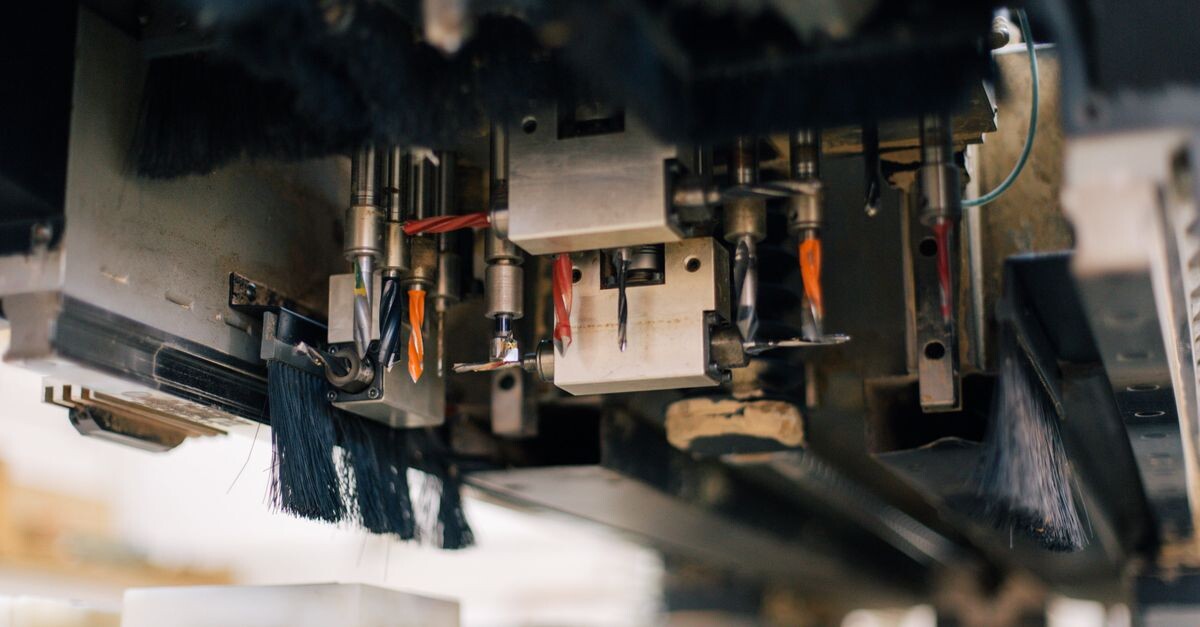
Common aluminium bending equipment includes press brakes, roll benders, rotary draw benders, and CNC folder machines. Selecting the right machine depends on material thickness, bend complexity, production volume, and required tolerance; press brakes suit low‑ to medium‑volume angular bends, while rotary draw benders excel at complex, repeatable profiles.
Selection checklist:
- Material thickness range.
- Bend angle and radius requirements.
- Production volume (prototyping vs. high volume).
- Tolerance and repeatability needs.
- Available floor space and budget.
When should you use a CNC folder versus a manual press brake?
Use a CNC folder for high‑volume, repeatable bends with tight tolerances, especially on thin sheets where speed and consistency matter. A manual press brake is ideal for prototyping, low‑volume runs, or thick sections where operator skill can adjust for material variations and springback on the fly.
- CNC folder: thin sheets (<3 mm), high volume, tight tolerance.
- Manual press brake: thick sections, low volume, prototype work.
What are common defects in aluminium bending and how to prevent them?
Common defects in aluminium bending are cracking, excessive springback, surface scratching, and angular inaccuracy. Prevention involves choosing the right alloy, applying adequate lubrication, maintaining proper die clearance, using the correct bend radius, and performing stress‑relief anneals when needed to reduce residual stresses and ensure consistent quality.
- Cracking – avoid by proper alloy selection and lubrication.
- Springback – compensate with over‑bend or bottoming.
- Surface scratching – use clean gloves and protective film.
- Angular error – verify die set‑up and measure after release.
How can you detect cracking early during the bending process?
Early cracking detection relies on visual inspection under good lighting, using magnifying lenses or borescopes to spot micro‑fractures at the bend toe, and listening for unusual sounds during deformation. Non‑destructive testing methods such as dye penetrant or ultrasonic scans can confirm subsurface cracks before they propagate.
- Visual inspection with 10× magnifier.
- Audible check for abnormal sounds.
- Dye penetrant test for surface cracks.
- Ultrasonic scan for subsurface flaws.
How to calculate bend allowance and bend deduction for aluminium sheets?
Bend allowance (BA) is the neutral‑axis arc length: BA = π × (R + K × T) × (A/180), with R = inside radius, T = thickness, K = K‑factor (0.33‑0.5 for aluminium), and A = bend angle. Bend deduction (BD) = 2 × (R + T) – BA.
Example calculation for a 2 mm thick 5052 sheet, 90° bend, 2 mm inside radius, K‑factor 0.4:
- BA = π × (2 mm + 0.4 × 2 mm) × (90/180) = π × (2 + 0.8) × 0.5 = π × 2.8 × 0.5 ≈ 4.40 mm.
- BD = 2 × (2 mm + 2 mm) – 4.40 mm = 2 × 4 – 4.40 = 8 – 4.40 = 3.60 mm.
What is the K‑factor and how does it vary for different aluminium alloys?
The K‑factor indicates the neutral axis location relative to material thickness; a lower K‑factor shifts the axis inward. For aluminium, typical K‑factor values range from 0.33 for soft alloys like 3003 to 0.50 for harder alloys such as 5052, reflecting increased elastic recovery and springback tendencies.
Typical K‑factor values:
- 3003‑H14: 0.33
- 5052‑H32: 0.45
- 5083‑H111: 0.48
- 6061‑T6: 0.44
What safety precautions should be taken when bending aluminium in a workshop?
Essential safety precautions for aluminium bending include wearing protective gloves, safety glasses, and hearing protection; keeping the work area free of oil and debris; verifying that machine guards are functional; never placing hands near the pinch point; and following lock‑out/tag‑out procedures during maintenance to prevent accidental activation.
- Wear cut‑resistant gloves and safety glasses.
- Use ear protection in noisy environments.
- Keep floor clean and dry.
- Ensure emergency stop is accessible.
- Perform LOTO before maintenance.
How should you handle aluminium sheets to avoid surface damage before bending?
Handle aluminium sheets with clean, lint‑free gloves or vacuum lifts to avoid transferring oils or dirt that can cause surface scratches. Store sheets flat on pallets with protective interleaving, and avoid dragging them across rough surfaces; use edge protectors to prevent dents and deformation prior to loading into the bend machine.
- Use nylon or cotton gloves.
- Employ vacuum lifts for large sheets.
- Store with polyethylene interleaving.
- Use corner protectors on pallets.
Where can you find reliable aluminium bending services in Selangor, Malaysia?
Reliable aluminium bending services in Selangor are offered by specialised fabricators such as Kamco Aluminium, which provides CNC press brake bending, roll forming, and custom fabrication for industries ranging from construction to automotive. Their Selangor facility combines experienced technicians, modern equipment, and strict quality control to meet tight tolerances and delivery schedules.
Other reputable providers include:
- Alumec Sdn Bhd – CNC press brake and roll forming.
- MetalTech Fabrication – custom aluminium extrusion bending.
- Selangor Metal Works – prototype and low‑volume bending.
What factors should you consider when selecting a bending service provider?
Consider the provider’s equipment range, expertise with specific aluminium alloys, turnaround time, pricing structure, and quality certifications such as ISO 9001. Request sample bends, check client testimonials, and verify they can meet your required tolerances, surface finish, and any secondary operations like drilling or welding.
- Equipment: press brakes, rotary draw, CNC folders.
- Alloy expertise: 3000, 5000, 6000 series.
- Certifications: ISO 9001, ISO 14001.
- Lead time: typically 2‑5 days for standard bends.
- Quality: request first‑article inspection reports.
Frequently Asked Questions
What is the best aluminium alloy for bending?
For most general bending applications, the 5000 series alloy 5052 offers an excellent balance of strength, formability, and corrosion resistance. If you need higher strength with still good bendability, consider 5083 or a 3003 alloy for very tight radii.
How do I reduce springback in aluminium bending?
Reduce springback by over‑bending the workpiece by the measured springback amount, using bottoming dies, or selecting alloys with lower elastic recovery such as 3003. Proper die width and lubrication also help minimise elastic rebound.
What safety gear is required when bending aluminium?
Operators should wear cut‑resistant gloves, safety glasses, and hearing protection at all times. Additionally, ensure the work area is clean, machine guards are in place, and follow lock‑out/tag‑out procedures during maintenance.
Can I bend 7075 aluminium without cracking?
Bending 7075‑T6 without cracking is difficult due to its low ductility; it usually requires solution‑annealing to the O condition, larger bend radii, or specialised rotary draw equipment. Attempting a cold bend on untreated 7075‑T6 will likely cause surface cracks.
How do I calculate bend allowance for a 90° bend?
Use the formula BA = π × (R + K × T) × (A/180), where R is the inside bend radius, T is material thickness, K is the K‑factor (typically 0.33‑0.5 for aluminium), and A is the bend angle in degrees. Insert your values and compute the arc length to obtain the bend allowance.
Share this content: